


Root Canal Treatment with a Microscope
Precise and high-quality root canal treatment with a microscope at HanzaDenti! Root canal treatment with a microscope ensures high precision and better treatment results. Find out more and book an appointment today!
Book a visit
Modern Technology

Best Dentists

Fast and Convenient Booking
Microscopic Root Canal Treatment in Tallinn
Microscopic Root Canal Treatment – Precision and Quality at HanzaDent
Root canal treatment is a complex procedure where every detail matters. Accurate cleaning and treatment of root canals require excellent visibility, especially when dealing with fine and hard-to-reach structures. Microscopic root canal treatment ensures precision and high-quality care.
Advantages of Microscopic Root Canal Treatment
With up to 36x magnification, dentists using a microscope can identify problems invisible to the naked eye. This allows the discovery of all root canals, including the smallest and accessory ones, ensuring treatment is carried out with maximum precision. The better the dentist sees the problem, the higher the chance of a successful outcome.
What is a Dental Microscope?
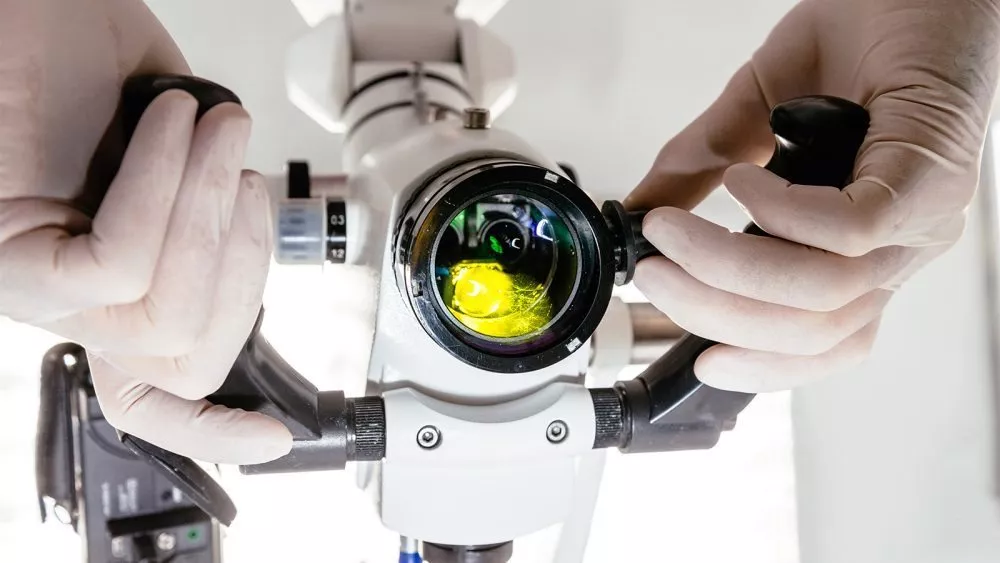
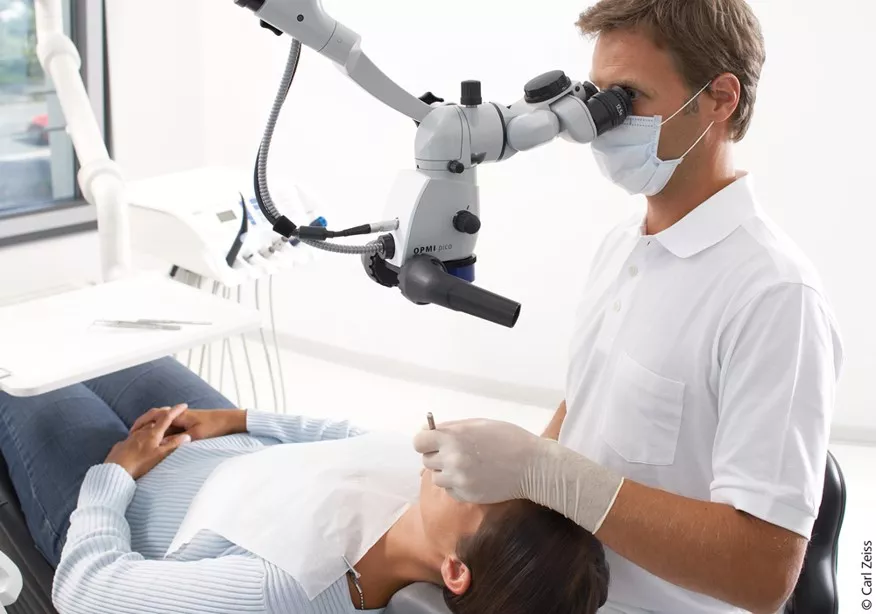
A dental microscope is a specialized device enabling the dentist to examine the tooth’s internal structures and analyze complex root canal systems. It also allows video recording and imaging, helping the dentist to inform the patient thoroughly and document the treatment.
Microscopic Root Canal Treatment at HanzaDent
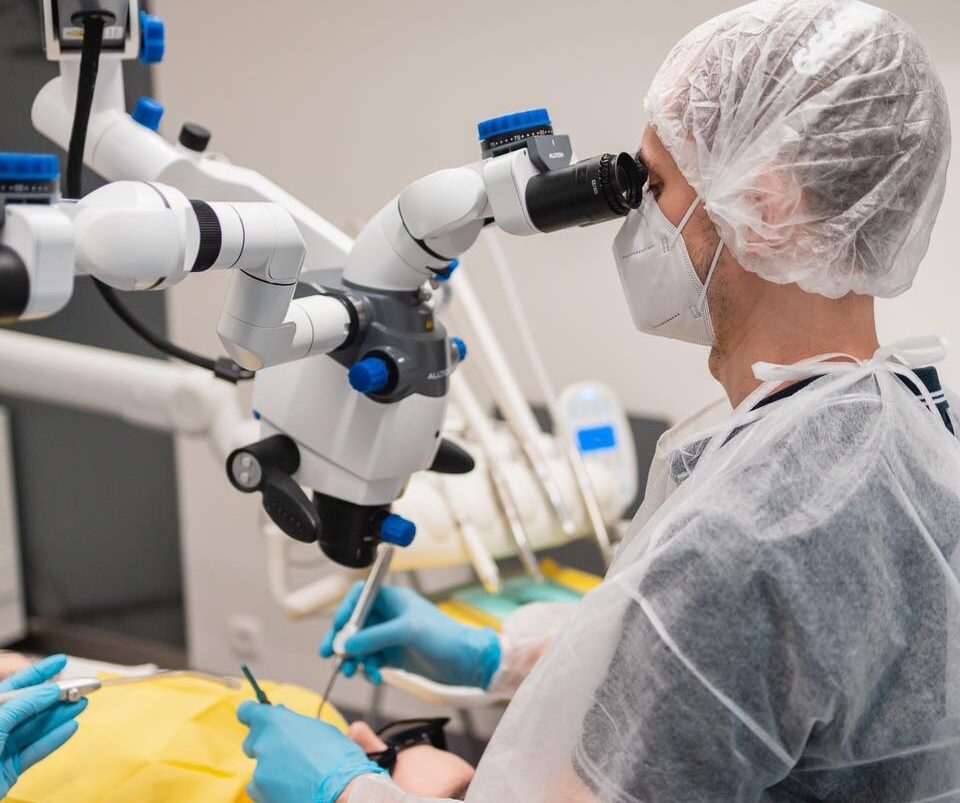
All treatment rooms at HanzaDent clinics are equipped with modern microscopes. Microscopic treatment is available for any procedure where it is deemed necessary. Root canal treatment under a microscope is offered in all three HanzaDent clinics in Tallinn: Tammsaare, Laulupeo, and Paldiski Road locations.
Choose HanzaDent to ensure your teeth receive care with the highest precision and dedication!
| SERVICE | PRICE |
| Consultation with a root canal specialist | 100€ |
| Incisor/canine primary root canal treatment ca | 600€ |
| Incisor/canine retreatment ca | 680€ |
| Premolar root canal initial treatment ca | 700€ |
| Premolar root canal retreatment ca | 790€ |
| Molar root canal initial treatment ca | 880€ |
| Molar root canal retreatment ca | 990€ |
| The cost of restoring a tooth with a filling will be added. |
Satisfied customers
47000+

Customer Reviews
First-class service, truly impressive. I will definitely come back again!

Aleksandr Shmanjov
Dr. Alina Ismailova is very pleasant and professional.

Angelica Tahker
A very polite, professional, and attentive dentist, Dr. Rasmus Peeker!
My previous visits to the dentist were quite painful, especially the removal of a wisdom tooth. However, I went to Dr. Rasmus Peeker, and the wisdom tooth extraction was absolutely painless! Highly recommend!

Nadezda Zdanova
Great dentists who do their job well, both in treatment and consultation. In particular, Dr. Ermel's advice helped me take better care of my teeth, so I don't need to visit the dentist as often as I used to.

Aleksis Anijärv
Everyone welcomed me very warmly. The doctor has always worked quickly, painlessly, and with high quality. Now I visit Hanzadent twice a year for regular check-ups to make sure everything is fine and to feel more confident!

Stiven Lipetski
Dentists




Useful information
Process
1
Consultation and diagnosis
The dentist assesses the condition of the tooth, identifies problematic root canals using X-rays, and explains the course and goals of treatment to the patient.
2
Root canal cleaning with a microscope
Using a microscope, the doctor can find all the root canals, including smaller and hard-to-see accessory canals. The magnification ensures precise cleaning and disinfection to remove bacteria and tissue that cause inflammation.
3
Root canal filling and tooth restoration
After cleaning the root canals, the doctor fills them with a special material and restores the crown of the tooth to ensure functionality and aesthetics. The use of a microscope increases the success of the treatment and long-term results.
Contraindications for Microscopic Root Canal Treatment
Microscopic treatment may not be suitable in the following cases:
- Extensively damaged tooth – If a tooth is too damaged for restoration, treatment may be unfeasible.
- Severe systemic diseases – Uncontrolled diabetes, immunodeficiency, or other chronic conditions can be contraindications.
- Allergy to materials – Rare allergic reactions to materials used during treatment might occur.
- Pregnancy in the first trimester – Though generally safe, treatment is recommended after the first trimester if possible.
- Poor oral hygiene – Insufficient hygiene increases the risk of complications and affects treatment success.
- Psychological conditions – Dental phobia or other conditions impairing cooperation may influence the procedure.
Before starting treatment, your dentist will thoroughly assess your condition to determine if microscopic treatment is the right choice for you.

Dentist’s Advice
Why Choose Microscopic Root Canal Treatment?
- Increased precision – Microscopes help find all root canals, even the tiniest ones, improving treatment success.
- Complication prevention – Accurate treatment reduces the risk of inflammation or reinfection of root canals.
- Preservation of tooth and jaw – Properly done root canal treatment prevents tooth extraction and maintains jaw integrity.
- Comfort and quality – Using a microscope ensures more thorough and effective treatment, making the process more comfortable for the patient.
- Don’t delay – timely root canal treatment can save your tooth and prevent more complex and costly procedures in the future.
If you’re experiencing tooth pain or suspect a root issue, contact the specialists at HanzaDent today! Your smile deserves the best care.
FAQ
Patient 32 y.
18.12.2024
What is microscopic root canal treatment and how does it differ from conventional root canal treatment?
Patient 32 y. 18.12.2024
Answer: Microscopic root canal treatment is a method in which a dental microscope is used to better visualize the root canals. It allows the dentist to see fine canals, cracks, and hidden anatomical features that may go unnoticed during conventional root canal treatment. It differs from standard root canal treatment in terms of greater precision and control, especially in complex or previously treated teeth.
Patient 27 y.
18.12.2024
Does microscopic root canal treatment guarantee the elimination of inflammation?
Patient 27 y. 18.12.2024
Answer: Microscopic root canal treatment helps increase treatment precision and improve the quality of inflamed tissue removal, but it does not provide an absolute guarantee of complete elimination of inflammation. The outcome depends on the extent of the inflammation, the tooth’s anatomy, and the body’s healing ability. However, the use of a microscope reduces the risk of leaving parts of the root canals untreated.
Patient 45 y.
18.12.2024
What is the difference between conventional root canal treatment and root canal treatment performed with a microscope?
Patient 45 y. 18.12.2024
Answer: In conventional root canal treatment, the procedure is performed with the naked eye or magnifying glasses, whereas microscopic root canal treatment provides significantly greater magnification and illumination. This difference is especially important in narrow, branching, or previously treated root canals. Microscopic root canal treatment allows more precise cleaning and filling, which may improve the prognosis in complex situations.
Patient 38 y.
18.12.2024
Is root canal treatment with a microscope a painful procedure?
Patient 38 y. 18.12.2024
Answer: Root canal treatment with a microscope is generally not painful, as the procedure is performed under local anesthesia. The anesthesia ensures that no pain is felt during treatment. After the procedure, temporary tenderness or sensitivity may occur, related to tissue healing. The duration and intensity of discomfort depend on individual response and the complexity of the treatment.
Patient 29 y.
18.12.2024
How long does microscopic root canal treatment take?
Patient 29 y. 18.12.2024
Answer: The duration of microscopic root canal treatment depends on the condition of the tooth, the number of root canals, and the complexity of their anatomical structure. One treatment session may take longer than conventional root canal treatment due to the high level of precision involved. In some cases, multiple visits are required. The dentist will provide an overview of the expected time frame and treatment stages before starting. One visit may last up to 2–3 hours.
Patient 51 y.
18.12.2024
Microscopic root canal treatment – what is the cost of this procedure and what does it depend on?
Patient 51 y. 18.12.2024
Answer: The cost of microscopic root canal treatment depends on the tooth’s location, the number of root canals, and the complexity of the treatment. The price is also influenced by whether it is an initial treatment or a retreatment. Since microscopic root canal treatment is more time-consuming and technically demanding, its cost may be higher than that of conventional root canal treatment. The exact price is determined after diagnostics and preparation of the treatment plan.
Patient 32 y.
10.10.2025
When is microscopic root canal treatment particularly indicated?
Patient 32 y. 10.10.2025
Answer: Microscopic root canal treatment is particularly indicated in cases of complex root canals, previously unsuccessful root canal treatment, or persistent inflammation. It is also used for teeth with unusual anatomy or hidden canals. The use of a microscope improves visibility and increases treatment precision in such situations.