


Root Canal Treatment
Accurate and professional root canal treatment at HanzaDent! Root canal treatment helps save a damaged tooth and restore its health. Find out more and book an appointment at our clinics today!
Book a visit
Modern Technology

Best Dentists

Quick and Convenient Booking
Root Canal Treatment in Tallinn
Root canal treatment in Tallinn can be performed at three HanzaDent Dental Clinics: Tammsaare road clinic, Paldiski road clinic, and Laulupeo street clinic. Endodontic treatment is necessary when a tooth hurts or when there is an infection under the root of the tooth. In both cases, it is a complication of advanced tooth decay. Often, when there is an infection under the tooth, the patient may not experience any symptoms at all. In such cases, timely diagnosis and treatment are still necessary. In some cases, this treatment may also be indicated after trauma (depending on the severity of the trauma).
How does the doctor know that root canal treatment is necessary?
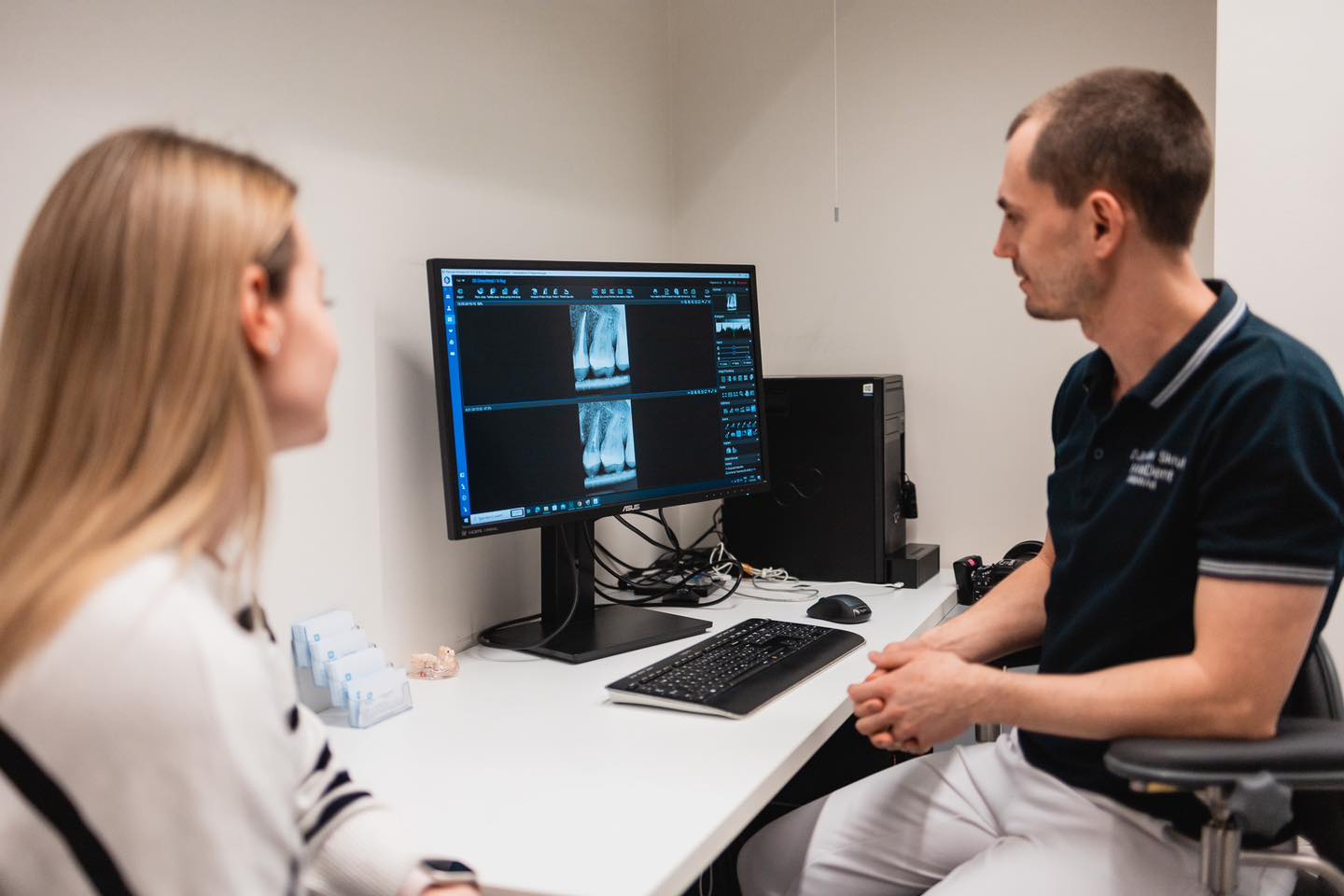
First, the doctor will ask the patient if and how the tooth has been painful, and what symptoms the patient has. The root canal specialist will then conduct an oral examination, take an X-ray, and, if necessary, perform additional tests such as sensitivity to temperature and tenderness upon biting. Once the diagnosis is confirmed, root canal treatment will begin. If the doctor has any doubts, they may decide to monitor the situation/tooth. This is often done at the very beginning of the infection, as in some cases, it can be difficult to identify exactly which tooth is causing the pain, especially when several adjacent teeth need treatment.
Stages of Root Canal Treatment:
- The doctor administers anesthesia to the patient.
- The tooth is isolated from the mouth using a rubber dam to ensure cleanliness in the treatment area.
- The tooth cavity (pulp chamber) is opened.
- The pulp chamber and root canal system are cleaned of decayed tissue and infection.
- During the procedure, additional X-rays may be taken if necessary.
- The root canal system is filled.
- The tooth is crowned or restored in another way.
Process
1
Consultation and diagnosis
The root canal dentist will conduct an initial examination, discuss the patient's complaints, assess the condition of the tooth, and, if necessary, take an X-ray for an accurate diagnosis and treatment plan.
2
Preparation for the procedure
The dentist ensures the sterility of the procedure, administers local anesthesia, and opens the tooth cavity to access the root canals.
3
Performing the procedure
The root canals are cleaned, disinfected, and filled, after which the tooth is restored with a filling or crown, depending on the patient's needs.
Pricelist
Root canal treatment prices: Check out the basic prices and book an appointment today!
All prices| SERVICE | PRICE |
| Consultation with a root canal specialist | 100€ |
| Incisor/canine primary root canal treatment ca | 600€ |
| Incisor/canine retreatment ca | 680€ |
| Premolar root canal initial treatment ca | 700€ |
| Premolar root canal retreatment ca | 790€ |
| Molar root canal initial treatment ca | 880€ |
| Molar root canal retreatment ca | 990€ |
| The cost of restoring a tooth with a filling will be added. |
Satisfied customers
47000+

Customer reviews
First-class service, truly impressive. I will definitely come back again!

Aleksandr Shmanjov
Dr. Alina Ismailova is very pleasant and professional.

Angelica Tahker
A very polite, professional, and attentive dentist, Dr. Rasmus Peeker!
My previous visits to the dentist were quite painful, especially the removal of a wisdom tooth. However, I went to Dr. Rasmus Peeker, and the wisdom tooth extraction was absolutely painless! Highly recommend!

Nadezda Zdanova
Great dentists who do their job well, both in treatment and consultation. In particular, Dr. Ermel's advice helped me take better care of my teeth, so I don't need to visit the dentist as often as I used to.

Aleksis Anijärv
Everyone welcomed me very warmly. The doctor has always worked quickly, painlessly, and with high quality. Now I visit Hanzadent twice a year for regular check-ups to make sure everything is fine and to feel more confident!

Stiven Lipetski
Contraindications
We recommend postponing root canal treatment in the following cases, if possible: acute infections or inflammations in the mouth, serious systemic diseases, allergies to medications or materials used, insufficient oral hygiene, and extensive damage to the tooth structure or root that makes restoration impossible.
- Acute infections or inflammations in the mouth
- Serious systemic diseases (consultation with the patient’s doctor is necessary)
- Allergies to medications or materials used
- Insufficient oral hygiene
- Extensive damage to the tooth structure or root
Dentists




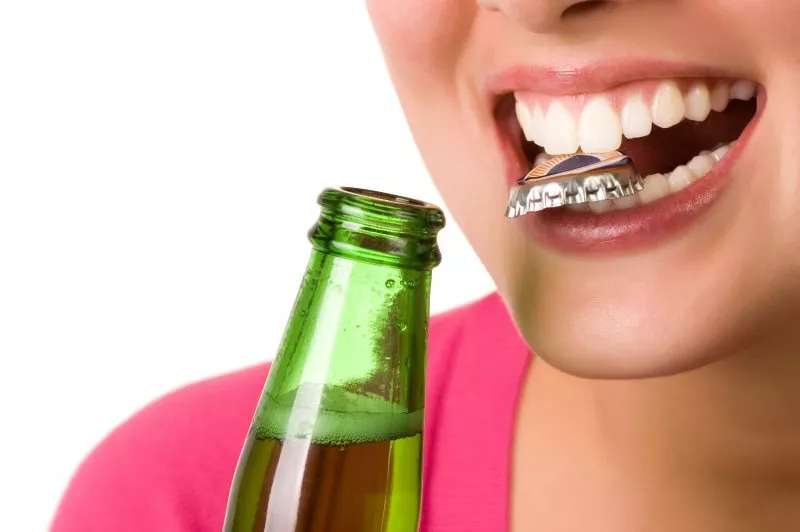
Dentist’s Advice
What happens if root canal treatment is not performed?
- Spread of infection – Untreated root infection can spread to the jawbone, gums, or even other parts of the body, leading to serious health issues.
- Persistent pain – Tooth pain will worsen over time and disrupt daily life.
- Tooth loss – If treatment is delayed, the tooth may become irreparable, and extraction may become the only solution.
- More expensive treatment in the future – Treating complications later may be much more complex and costly than performing root canal treatment in a timely manner.
- Body-wide complications – Oral infections can spread to the bloodstream, causing heart problems, weakened immunity, or other serious conditions.
Don’t delay! Timely root canal treatment helps avoid serious consequences and preserves the health of your teeth.
Good to know


FAQ
Patient 32 y.
18.12.2024
Is root canal treatment a painful procedure?
Patient 32 y. 18.12.2024
Answer: Root canal treatment is performed today under local anesthesia, so pain is usually not felt during the procedure. The anesthesia temporarily numbs the treated area and allows the treatment to be carried out as comfortably as possible. After the procedure, mild pain or tenderness may occur, which is usually temporary and related to tissue healing. If necessary, discomfort can be relieved with painkillers according to the dentist’s recommendations.
Patient 27 y.
18.12.2024
Why does a tooth hurt after root canal treatment?
Patient 27 y. 18.12.2024
Answer: After root canal treatment, the tooth may hurt or be sensitive for some time because the surrounding tissues react to the procedure. Pain may occur due to cleaning of the root canals and removal of inflamed tissue. It usually subsides within a few days. If the pain persists, increases, or is accompanied by swelling, you should contact your dentist to rule out complications.
Patient 45 y.
18.12.2024
Is root canal treatment possible during pregnancy?
Patient 45 y. 18.12.2024
Answer: Root canal treatment is possible during pregnancy and, if necessary, also recommended, especially in cases of pain or inflammation. Untreated inflammation may pose a greater risk than carefully planned dental treatment. The procedure is carried out with consideration of pregnancy, and X-rays are taken only when necessary. Before starting treatment, it is important to inform the dentist about the pregnancy in order to choose the most appropriate treatment plan.
Patient 38 y.
18.12.2024
What does it mean if the cheek is swollen after root canal treatment?
Patient 38 y. 18.12.2024
Answer: Mild swelling may be temporary, but noticeable, increasing, or painful swelling is not normal. In such cases, you should contact your dentist, as the cause may be an infection or the need for additional treatment. Early intervention helps prevent complications.
Patient 29 y.
18.12.2024
What is root canal retreatment and when is it performed?
Patient 29 y. 18.12.2024
Answer: Root canal retreatment means cleaning and filling the root canals of a previously treated tooth again. Retreatment may be necessary if the previous treatment was insufficient or if a new inflammation develops. Reasons may include complex root canal anatomy, deterioration of the previous filling, or persistence of microbes in the canal. The decision to perform retreatment is made based on diagnostic examinations.
Patient 51 y.
18.12.2024
Is it allowed to consume alcohol after root canal treatment?
Patient 51 y. 18.12.2024
Answer: After root canal treatment, alcohol consumption is not recommended, especially during the first days after the procedure. Alcohol may affect the healing process and intensify inflammatory reactions. It may also cause side effects when combined with painkillers or antibiotics. For safety reasons, it is recommended to follow the dentist’s instructions and avoid alcohol until healing is complete.
Patient 60 y.
15.01.2025
How long does root canal treatment take?
Patient 60 y. 15.01.2025
Answer: The duration of root canal treatment depends on the condition of the tooth, the number of root canals, and the extent of inflammation. In some cases, one visit is sufficient; in more complex cases, treatment may take place in several stages. One visit usually lasts about one to one and a half hours, but this may vary. At the beginning of treatment, the dentist provides an overview of the expected treatment plan and timeline.
Patient 51 y.
20.02.2026
Why is the tooth sensitive after root canal treatment?
Patient 51 y. 20.02.2026
Answer: The duration of root canal treatment depends on the condition of the tooth, the number of root canals, and the extent of inflammation. In some cases, one visit is sufficient; in more complex cases, treatment may take place in several stages. One visit usually lasts about one to one and a half hours, but this may vary. At the beginning of treatment, the dentist provides an overview of the expected treatment plan and timeline.