How to remove denture adhesive safely?
Introduction: why removing denture adhesive matters
Denture adhesive helps improve the stability and comfort of dentures, but at the end of the day it should always be removed carefully. If adhesive remains on the gums or on the surface of the denture, it can cause discomfort, bad breath and even inflammation.
Proper denture adhesive removal is just as important as using the adhesive correctly. HanzaDent dentists share practical advice on how to make the process safe, simple and effective.
Why should denture adhesive be removed every day?
Hygiene: adhesive can collect food particles and bacteria.
Gum health: adhesive residue left in place for a long time may cause gum inflammation.
Denture durability: regular cleaning helps preserve the material and appearance of the denture.
Comfort: a clean denture feels much more natural the next day.
Step-by-step guide to removing denture adhesive
1. Rinse your mouth with warm water
Warm, not hot, water helps soften the adhesive and makes it easier to remove.
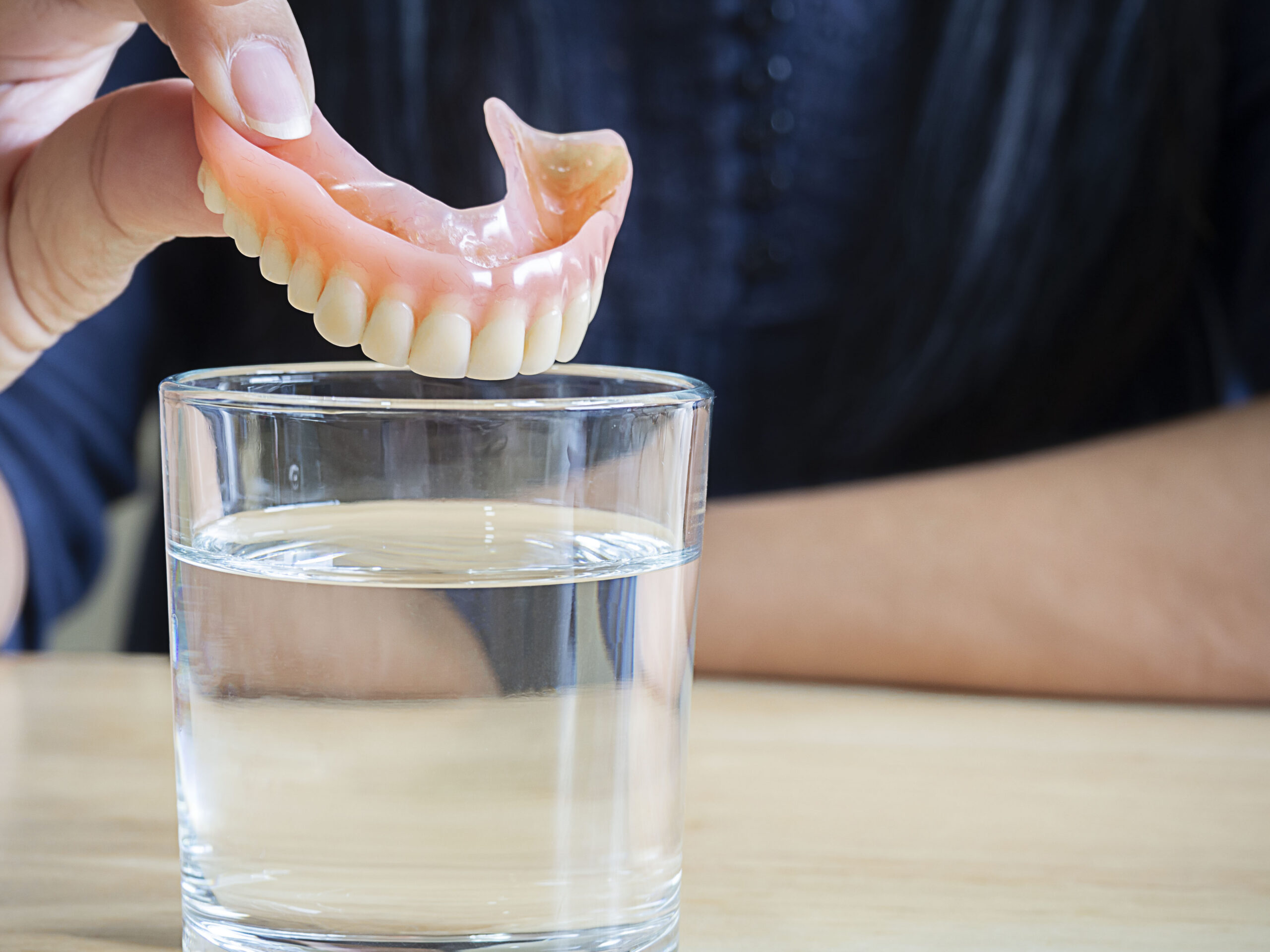
2. Remove the denture carefully
Use both hands and pull gently. If the denture is very firmly attached, rinse your mouth several times with warm water first.
3. Clean the surface of the denture
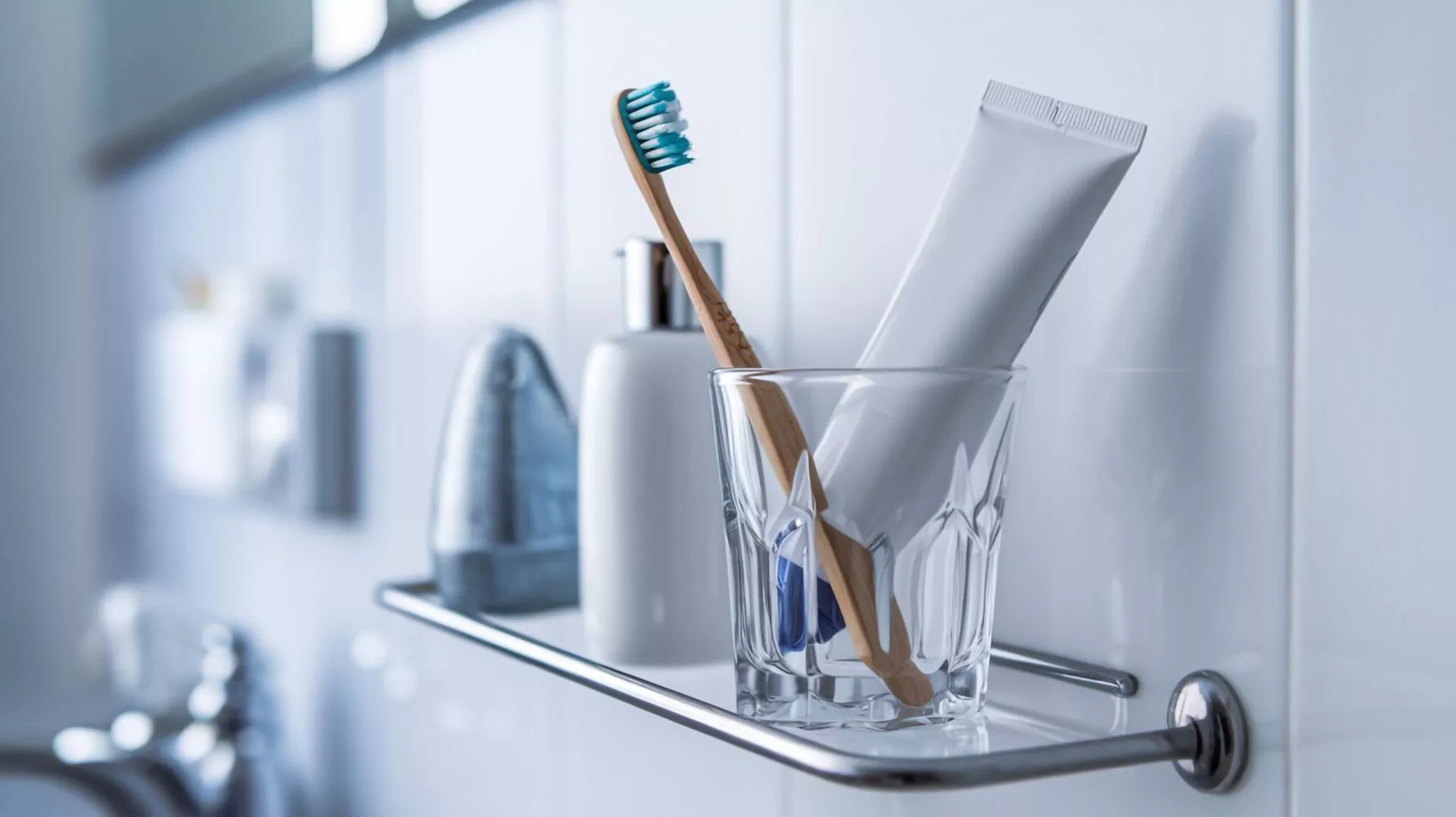
Use a special denture brush and denture cleaning product. Avoid toothpaste, as it may be too abrasive and can damage the surface of the denture.
4. Remove residue from the gums
Moisten a piece of gauze or use a soft cloth. Gently wipe the gums, tongue and palate. Do not rub too hard, as this may irritate the mucous membrane.
5. Use special cleaning solutions if needed
Pharmacies offer solutions and tablets that help dissolve adhesive residue. Consult your dentist to find out which product is best suited for you.
Common mistakes when removing denture adhesive
Using too much force: pulling the denture out forcefully may damage it or injure the gums.
Using abrasive products: toothpaste with a sandpaper-like effect can wear down the denture.
Soaking the denture in hot water: heat can deform the denture.
Ignoring residue: adhesive residue in the mouth can cause inflammation and an unpleasant smell.
How to care for dentures after removing adhesive
Daily cleaning: clean the denture with a special brush every evening.
Soaking solution: leave the denture in a cleaning solution overnight or for as long as stated on the product packaging.
Rinsing and drying: before using the denture in the morning, rinse it thoroughly and dry it.
When should you see a dentist?
If removing the adhesive becomes very difficult every day, or if the denture does not stay in place at all without adhesive, it may be time to check:
whether the denture needs adjustment,
whether the shape of the gums has changed,
whether an implant could be a more comfortable solution.
HanzaDent dentists can assess the situation and offer an individual solution.
HanzaDent’s advice for safe daily care
Always use warm water, not hot water.
Take your time. Do not try to force the denture out.
Clean your gums as carefully as the denture itself.
If irritation or pain appears in the mouth, come in for a check-up.
Summary
Removing denture adhesive is an important part of daily oral hygiene. It helps maintain gum health, extends the lifespan of the denture and makes wearing dentures more comfortable.
However, if you notice that you need more and more adhesive every day, or that removal is becoming difficult, it is worth contacting a HanzaDent specialist.
Proper care = a healthy mouth + a confident smile.
News

What Happens If You Drink Alcohol After Tooth Extraction?
Read more
Alcohol and Painkillers After Tooth Extraction
Read more
Modern Microscopes in Dentistry: A Treatment Revolution
Read more
Advantages of Implants Over Traditional Bridges and Prostheses
Read more
The Importance of Regular Dental Care for Children: Expert Advice
Read more